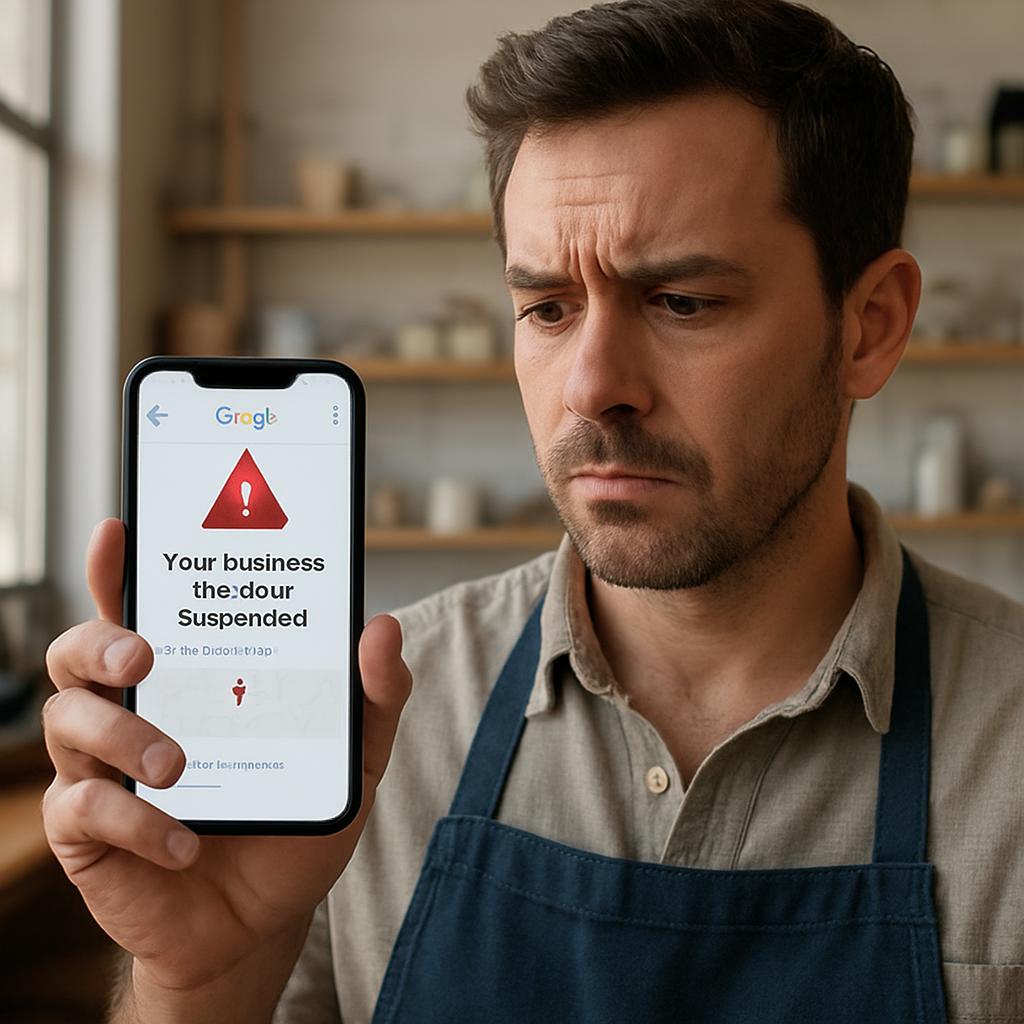
Most small business owners think about their Google Business Profile the same way they think about their website. They set it up, they verified it, so it's theirs and nobody else can touch it. That belief is exactly what criminals are counting on.
I've optimized more than 1,000 Google Business Profiles for real estate agents and mortgage lenders across the U.S. and Canada, and the most common thing I find has nothing to do with marketing. The owner verified the profile once, maybe added a few photos, and hasn't opened the dashboard since. Meanwhile, that profile is the first thing customers see when they search, and it's the button they press to call.
The flaw is built into how the profile works
Here is the part almost nobody explains to business owners. Google does not treat your Business Profile as a page you own outright. It treats it as public information about a place, and it lets the public help keep that information current. Anyone with a Google account can click "Suggest an edit" and propose a new phone number, website, business hours, category, or even a "permanently closed" status. Google decides which suggestions go live, and some get published without the owner approving anything.
Local search expert Mike Blumenthal tested this in August 2024 on a listing he controls in Bradford, Pennsylvania. He asked three colleagues to each suggest a new phone number. The first suggestion was rejected. The second sat pending. The third was published, and the number on the public listing changed within minutes. Google emailed a listing manager, but Blumenthal, the primary owner, got no email at all. The only sign inside the dashboard was a small notice two clicks deep, the kind most owners would never spot.
Think about what that means for a plumber, a locksmith, or a real estate agent. The business name, the photos and years of five-star reviews all stay right where they were. The customer has no reason to doubt anything. They tap "Call," and the phone rings somewhere else.
This is already happening at scale
In March 2025, Google sued an alleged network of scammers it says created or took over more than 10,000 listings on Google Maps. According to CBS News, the investigation started when a Texas business reported that an unlicensed locksmith was impersonating it. Google said the listings ranged from businesses that never existed to real accounts that had been hacked or hijacked, with calls meant for real companies routed to scammers who then charged far more than the customer was originally quoted.
Suggested edits are only one way in. The rest go after the owner directly. Hijackers send ownership requests, so the real owner gets an email asking to approve or deny someone who claims to manage the business. Approve it, and that person can change the phone number or website, or remove the listing. In 2022, Google sued a company called G Verifier after hundreds of business owners complained about telemarketing calls from callers who said they were part of Google. And in June 2026, a search marketer flagged a Google ad that showed up when people searched "my business," the exact phrase many owners type to reach their dashboard. The ad looked like Google and led to a page built to take over the owner's account.
Why small businesses take the hardest hit
A national chain has people watching its listings every day. A small business owner usually finds out when a regular customer says, "I tried to call you." By then, days or weeks of calls may be gone, and there's no way to know who they were. For a real estate agent, one of those calls could have been a seller ready to list.
The damage doesn't stop at lost calls. A customer who gets scammed after calling a business they found on Google doesn't blame Google. They blame the name on the listing. And because so many owners run Gmail, Drive and their Business Profile from one Google account, as security firm Bitdefender pointed out in May 2026, one stolen password can open far more than the profile.
Owners are the security system
My argument is simple. Google could close much of this gap by alerting the primary owner to every change to a phone number or website, and by holding those changes until the owner says yes. Until it does, the person who protects the profile is the person who owns it, and protecting it takes attention more than technology.
That means looking at your own listing the way a customer does, on Google Maps on your phone, every week, and checking the phone number and website before anything else. It means opening the list of people with access and removing former employees, past agencies and anyone you can't put a face to, because every extra manager is one more login that can be stolen. It means turning on two-step verification for the Google account that owns the profile, declining any ownership request you didn't expect, and reaching your dashboard through a saved bookmark instead of a search ad. Google's own help pages say it will never ask for private or sensitive information. Treat any call or message that does as a scam.
None of this is complicated. The owners who get hurt usually aren't careless. They just never knew their profile could change without them.
For more advice from our panel, read our expert roundup: 51 Experts on the Biggest Security Mistakes Small Businesses Make.
Bobby Kerr is the founder of LOC8 My Business and has optimized more than 1,000 real estate and mortgage Google Business Profiles across the U.S. and Canada.