
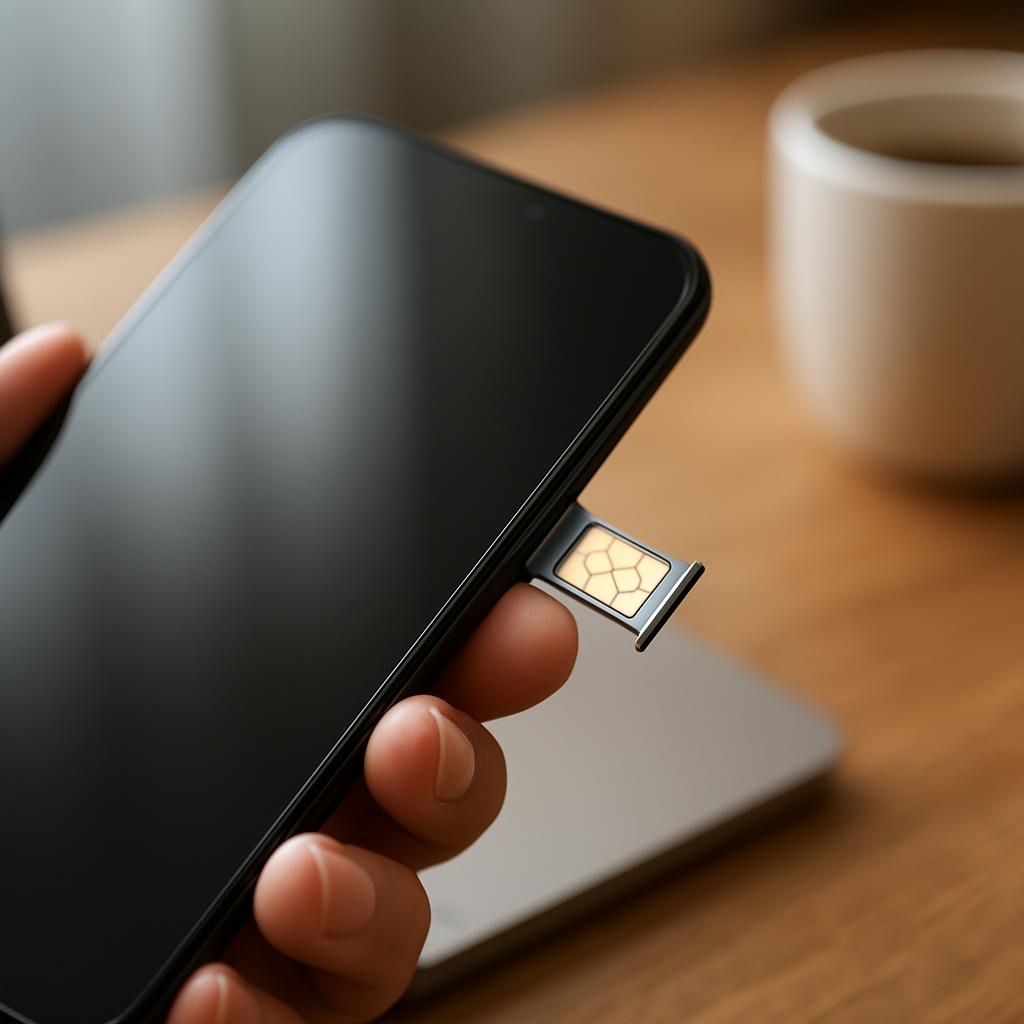
In most cases, no, you do not need a new SIM card to use 5G. Whether your phone can connect to a 5G network depends almost entirely on two things: the hardware inside your phone and whether your carrier has activated 5G service on your account. The SIM card itself is just an identity chip that tells the network who you are and what plan you're on. It doesn't determine what generation of wireless technology your phone can use.
That said, there are a few situations where a SIM swap genuinely matters, which is likely why the question comes up so often. If you're using a very old SIM card, particularly one issued years ago for a 3G or early 4G device, it's possible the chip is outdated enough that your carrier recommends replacing it. Some carriers have also used SIM upgrades as an opportunity to move customers onto SIMs with updated security or provisioning features that pair more smoothly with newer network tiers. But this is a carrier-side convenience measure, not a technical requirement of 5G itself.
The real gatekeeper for 5G access is your phone's modem and antenna hardware. 5G uses different radio frequencies and signal-processing technology than 4G LTE, so your device needs a 5G-capable chipset to tap into it. If you bought your phone in the last few years and it was marketed as 5G-ready, it almost certainly has the necessary hardware already built in. Older phones, even ones from just five or six years ago, often simply lack the physical components to connect to 5G, no matter what SIM card is inserted.
The second requirement is your carrier plan. Many carriers only enable 5G access for customers on specific plans or tiers, so even a brand-new 5G phone with the latest SIM won't show a 5G icon if your account isn't provisioned for it. This is a billing and network-permission issue, handled on the carrier's servers, not something stored on the SIM card.
Where things get slightly more complicated is with eSIM technology. Many newer phones support eSIM, a digital SIM profile that's programmed directly into the device rather than inserted as a physical card. eSIMs work exactly the same way as physical SIMs when it comes to 5G: they identify your account, they don't enable or block any particular network generation. If you're switching carriers or activating a new phone, you might be asked to set up a new eSIM profile, but that's a routine part of switching service, not a 5G-specific requirement.
You might also need a new SIM card in a related but separate scenario: switching carriers. If you move from one network provider to another, you'll typically need a SIM card (or eSIM profile) issued by the new carrier, because the SIM is tied to your account and network authentication. This can happen to coincide with someone upgrading to a 5G phone, which creates the impression that the new SIM was needed for 5G, when really it was needed because of the carrier switch.
Another case worth mentioning is physical SIM size. Phones have moved through several SIM form factors over the years, from standard SIM to micro-SIM to nano-SIM, and now toward eSIM-only designs on some flagship models. If you're moving from an old phone with a larger SIM slot to a new 5G phone that only accepts a nano-SIM or eSIM, you'll need to get a correctly sized SIM or activate an eSIM, but again, this is about fitting the phone, not about 5G compatibility.
If you want to confirm whether your current setup supports 5G, there are a few quick checks you can do. First, look up your phone model and confirm it's listed as 5G-capable; this information is usually in the phone's specifications or settings menu under network or cellular settings. Second, check your carrier account or app to see if your plan includes 5G access, since some lower-cost plans restrict users to 4G even on compatible hardware. Third, check your location, because 5G coverage, especially the faster mid-band and high-band versions, is still uneven across regions, meaning you might have everything set up correctly but still see a 4G icon simply because 5G isn't available where you are.
If after checking your phone is 5G-capable, your plan supports 5G, and you're in a coverage area, but you're still not connecting, contacting your carrier is a reasonable next step. In rare cases, they may suggest a SIM replacement if your current card has a technical fault or is old enough to cause connectivity issues, but this would be addressing a specific problem rather than a general rule that 5G requires a new SIM.
The short version: 5G is a network and hardware capability, not a SIM card feature. Unless you're switching carriers, dealing with a faulty or very old SIM, or moving to a phone with a different SIM form factor, your existing SIM card should work just fine once you have a 5G-capable phone and an active 5G plan.