
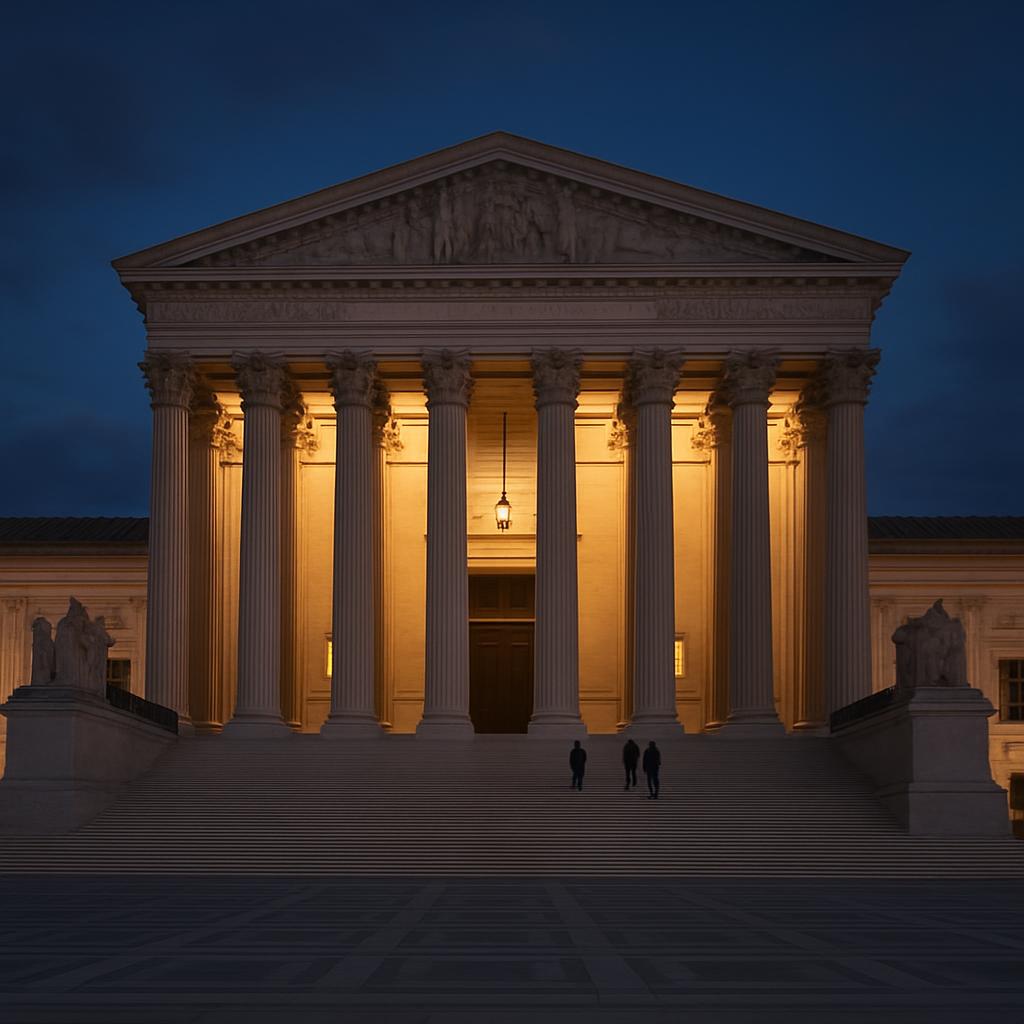
The Supreme Court on Wednesday rejected the Trump administration's effort to remove Federal Reserve Governor Lisa Cook from her post, according to Reuters reporting. The decision leaves one of the Fed's seven governors in place at a moment when the central bank's independence from the White House is under unusually close scrutiny.
Key takeaways
- The Supreme Court turned away the Trump administration's attempt to fire Federal Reserve Governor Lisa Cook, keeping her on the board that votes on interest rates.
- The justices also declined to let the administration claw back federal research grants tied to diversity, equity and inclusion programs.
- A separate case asking the Court to review how workplace complaints are handled inside the federal judiciary was rejected without comment.
Fed Governor Lisa Cook Keeps Her Seat
The Supreme Court declined the administration's push to remove Cook from the Federal Reserve's Board of Governors, letting lower-court protection of her position stand. The attempt to fire her had already been blocked by federal courts before reaching the justices, and Wednesday's outcome means she remains eligible to vote on the interest-rate decisions that shape borrowing costs for mortgages, credit cards and business loans nationwide.
The fight over Cook's tenure has become one marker of a broader confrontation between the White House and the Fed over who controls monetary policy. Because Fed governors serve staggered 14-year terms specifically to insulate rate-setting from short-term political pressure, removal attempts by a sitting president are rare and carry outsized weight in financial markets, which watch the Fed's voting lineup closely for signals on where rates are headed.
The case is one of several disputes between the administration and the courts that have reached the Supreme Court this year, a list that has grown large enough that there is no single agreed tally of how often the administration has lost.
Research Grants Tied to DEI Programs
The justices also declined the administration's bid to cut federal research grants connected to diversity, equity and inclusion programs, according to CNN. The move keeps funding flowing for now to projects that had been targeted as part of a wider push to eliminate DEI-linked spending across federal agencies.
Research funding fights have become a recurring flashpoint this year as agencies have moved to condition or cancel grants tied to diversity initiatives, drawing legal challenges from universities and research institutions. The dollar amounts at stake in individual grant disputes are often modest compared with overall federal research budgets, but the cumulative effect on university labs and early-career researchers has been significant; separately, the NIH reported a record number of early-career researchers funded in fiscal 2026, underscoring how much is riding on the broader federal research pipeline.
Judiciary Workplace Complaints Case Turned Away
In a separate order, the Supreme Court rejected a case asking it to review how workplace complaints are handled within the federal judiciary itself, according to Reuters. The justices gave no explanation for declining to hear the matter, which is standard practice when the Court denies a petition for review rather than ruling on the merits.
The federal judiciary has its own internal process for employee workplace complaints, separate from the one used across the executive branch, and critics have long argued it lacks independent oversight. By declining to take up the case, the Court leaves that internal system in place without weighing in on its adequacy, a decision that effectively closes this particular legal challenge.