
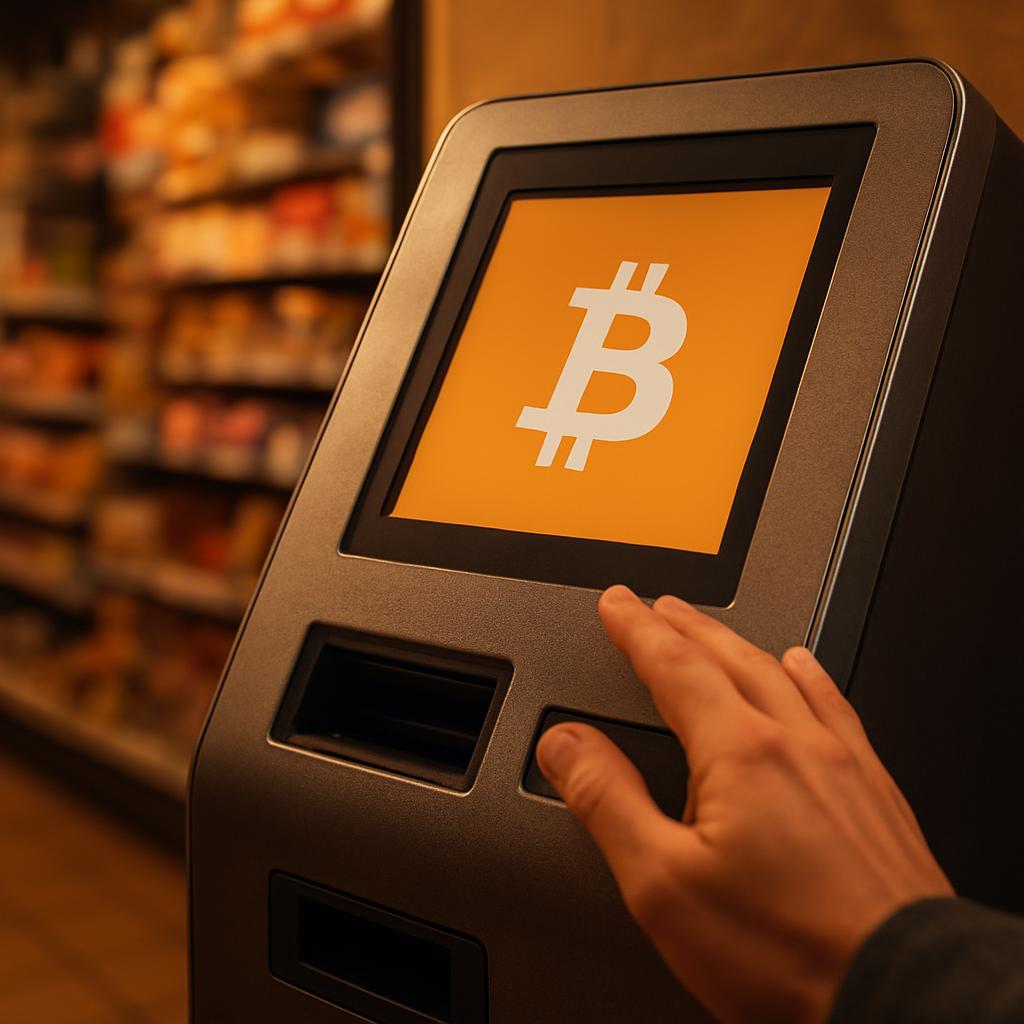
Blockchain keeps a shared record of transactions on thousands of computers at once, so no single bank, company, or government controls or can secretly change the data. It was built to move digital money without a middleman, but the same idea now tracks everything from shipping containers to property deeds. For most people, the technology shows up in everyday places, like a Bitcoin ATM at a local gas station or a crypto exchange app used to send money home across borders.
Key takeaways
- Blockchain is a shared digital ledger copied across many computers, not a single company's database
- Bitcoin is one application built on blockchain technology, not the same thing as the technology itself
- Getting cash out of blockchain-based money requires selling it through an exchange, ATM, or peer-to-peer trade
- Cryptocurrency held on a blockchain is real value people trade and spend, but it is not legal tender in most countries
- Blockchain's biggest practical uses today go beyond money, covering supply chains, land records, and payment settlement
What exactly does blockchain do?
Blockchain stores information in linked blocks of data that are copied across a network of computers, making records very hard to alter after the fact. Each new block contains a batch of transactions plus a code linking it to the block before it, so changing one block would break the chain and expose the tampering. As explained by Investopedia, this structure is what lets strangers trust a shared record without a bank or government verifying every entry.
This matters because traditional record-keeping relies on one trusted party, like a bank tracking account balances or a county office holding property titles. If that single party makes a mistake, gets hacked, or acts dishonestly, everyone who depends on the record is affected. Blockchain spreads the same job across many independent computers, called nodes, so the record stays accurate even if some of them go offline or try to cheat.
The technology first became widely known through Bitcoin in 2009, but it now runs far more than currency. Banks use blockchain-style systems to settle payments faster between countries, shippers use it to track cargo, and some local governments use it to store land titles so records can't be quietly rewritten.
How does blockchain work step by step?
Blockchain works by grouping transactions into blocks, checking them against the rest of the network, and permanently linking each verified block to the last one. The process repeats continuously, which is why the record is called a chain.
- A user requests a transaction, such as sending cryptocurrency or recording a piece of data.
- The request is broadcast to a network of computers running the same blockchain software.
- Computers on the network, sometimes called miners or validators, check that the transaction is valid and not a duplicate.
- Once enough computers agree, the transaction is bundled with others into a new block.
- The new block is given a unique code based on the block before it, linking the two together.
- The block is added to every copy of the chain across the network, updating the record everywhere at once.
This step-by-step checking is called consensus, and different blockchains use different methods to reach it. Bitcoin uses a method called proof of work, where computers compete to solve a puzzle, which uses significant electricity. Newer systems, including the one Ethereum switched to in 2022, use proof of stake, where validators put up their own coins as a deposit instead of burning electricity, making the process faster and cheaper to run.
What is blockchain vs Bitcoin?
Blockchain is the underlying technology, and Bitcoin is just one program built on top of it. Confusing the two is common, but it's similar to mixing up the internet with email: the internet is the infrastructure, and email is one thing you can do with it.
Bitcoin was the first major use of blockchain, designed specifically to let people send digital money without a bank. Since then, thousands of other projects have built their own blockchains for different purposes, some handling currency, others running smart contracts, tracking supply chains, or storing digital art ownership records known as NFTs.
|System|What it is|Main purpose| |---|---|---| |Blockchain|The underlying ledger technology|Record and verify data across many computers| |Bitcoin|A cryptocurrency built on its own blockchain|Send and store digital money| |Ethereum|A separate blockchain network|Run programs called smart contracts, plus its own currency, Ether| |Traditional bank database|A centralized ledger owned by one institution|Track account balances privately, controlled by that institution
This distinction matters locally too. A town that bans or restricts Bitcoin trading isn't necessarily rejecting blockchain technology itself, since the same local government could still use blockchain tools for things like permit tracking or voting record audits, separate from any cryptocurrency rules.
Is blockchain real money?
Blockchain itself is not money; it's the system that records transactions. The cryptocurrencies that run on blockchains, like Bitcoin or Ether, do hold real value and are bought, sold, and spent, but most countries don't treat them as official legal tender.
That means a store usually isn't required to accept Bitcoin the way it must accept local currency, though some choose to anyway. A handful of countries have experimented with giving a cryptocurrency legal tender status, but most governments instead treat it as property or an asset for tax purposes, meaning profits from selling it can be taxed like a stock sale.
The value of cryptocurrency also moves far more than most national currencies, sometimes rising or falling by double-digit percentages in a single day. That volatility is a major reason regulators in the United States, the European Union, and elsewhere have pushed for clearer rules, and why financial advisers often compare crypto investing to high-risk trading rather than everyday saving, an idea covered in the 3-5-7 rule for managing investment risk.
How do you get your money out of blockchain?
Cashing out cryptocurrency means selling it for regular currency through an exchange, an ATM, or a direct trade with another person. The coins themselves stay recorded on the blockchain; what changes is who owns them and whether that value has been converted into dollars, euros, or another local currency.
Most people use a cryptocurrency exchange app, such as Coinbase or Binance, where they sell their coins and then transfer the cash to a linked bank account, a process that typically takes a few business days. Others use a Bitcoin ATM, a machine increasingly found in convenience stores and shopping centers in many towns, which lets someone sell crypto and walk away with physical cash on the spot, usually for a higher fee than an online exchange charges.
A smaller group trades directly with another person, sometimes called peer-to-peer selling, using an app that holds the crypto safely until both sides confirm the trade is complete. Whichever method is used, keeping the digital wallet that holds the coins secure matters, since losing access to it can mean losing the funds permanently; this is one reason hardware security keys have become more common for protecting crypto accounts.
- Exchange sale: sell crypto on an app, then withdraw cash to a bank account
- Bitcoin ATM: sell crypto in person for immediate cash, often with higher fees
- Peer-to-peer trade: sell directly to another person through a trading app
- Debit cards: some exchanges issue cards that spend crypto balances directly at stores
Where is blockchain used beyond cryptocurrency?
Beyond digital money, blockchain is used to track goods, verify documents, and settle payments between banks. Large retailers have used blockchain-based systems to trace food from farm to shelf, so a contamination problem can be traced to its source in minutes instead of days. Shipping and logistics companies use similar systems to track cargo containers across multiple ports and carriers without each company needing separate paperwork.
Some local and national governments are testing blockchain for public records. A few places have piloted blockchain-based land registries, aiming to make property ownership harder to forge or dispute, since every past transfer stays visibly linked in the chain. Banks also use blockchain-style networks to move money across borders faster than older systems, which traditionally took several days to clear international transfers.
Artists and collectors use blockchain to track ownership of digital art and collectibles through NFTs, though that market has cooled considerably since its 2021 peak. Meanwhile, businesses exploring blockchain projects still need the same basic cybersecurity discipline as any other technology, a point echoed in broader reporting on common security mistakes small businesses make.
What are the benefits and drawbacks of blockchain?
Blockchain offers real advantages in trust and transparency, but it also carries real costs and limits that matter before relying on it.
- Pro: Hard to tamper with — once data is confirmed, changing it would require rewriting many linked blocks across many computers at once
- Pro: No single point of failure — the record keeps working even if some computers on the network go down
- Pro: Transparent history — anyone can trace a transaction's full path on public blockchains
- Con: Energy use — proof-of-work systems like Bitcoin mining consume large amounts of electricity
- Con: Slower than traditional databases — verifying across many computers takes more time than one central server
- Con: Irreversible mistakes — sending crypto to the wrong address usually can't be undone
- Con: Regulatory uncertainty — rules differ by country and even by state, which affects taxes, trading, and legal protection
These trade-offs explain why blockchain hasn't replaced ordinary databases for most everyday business tasks. A local shop's point-of-sale system, for example, doesn't need the tamper-proof guarantees blockchain offers, since a regular database with proper backups is faster and cheaper for that job. Blockchain tends to earn its cost when multiple parties who don't fully trust each other, such as competing shipping firms or international banks, need to share one accurate record.
What's next for blockchain?
Expect blockchain to keep expanding quietly into banking, government records, and supply chains rather than becoming a daily tool most people interact with directly. Major payment networks continue testing blockchain-based settlement to speed up business-to-business transfers, and several central banks are piloting their own digital currencies built on similar ledger technology, separate from Bitcoin or other public cryptocurrencies.
Regulation is likely to keep tightening as well. Governments in the United States, the European Union, and parts of Asia have been working through rules covering how exchanges operate, how crypto is taxed, and how much consumer protection applies, and those rules will keep shaping which services are available locally and at what cost.
Energy use remains a sticking point for proof-of-work systems, pushing more projects toward lower-energy consensus methods already adopted by networks like Ethereum. Readers who want to check the latest rules or project details should look to official sources, since this area changes quickly and local regulations vary by state and country.
Frequently asked questions
Can blockchain be hacked?
The core blockchain ledger is extremely difficult to alter once data is confirmed, but the services built around it, like exchanges and wallets, can still be hacked. Most major crypto thefts happen through stolen passwords, phishing, or exchange security failures, not by breaking the blockchain itself.
Do you need the internet to use blockchain?
Yes, most blockchain networks require an internet connection so computers can share and verify new blocks. Some wallets allow offline storage of crypto keys for extra security, but sending or receiving transactions still requires connecting to the network.
Is blockchain legal everywhere?
Blockchain technology itself is legal almost everywhere, since it's just a way of recording data. Rules around cryptocurrency trading and ownership vary much more, with some countries restricting exchanges heavily and others allowing open trading with light regulation.
What's the difference between a blockchain and a crypto wallet?
A blockchain is the shared record of all transactions, while a wallet is the tool a person uses to access their share of that record. The wallet holds the private keys needed to prove ownership and approve transactions, but it doesn't store the coins itself.
Does using blockchain cost money?
Most blockchain transactions involve a small fee, often called a gas fee, paid to the computers that verify and process the transaction. Fees change based on network traffic, rising during busy periods and dropping when fewer people are using the network.