
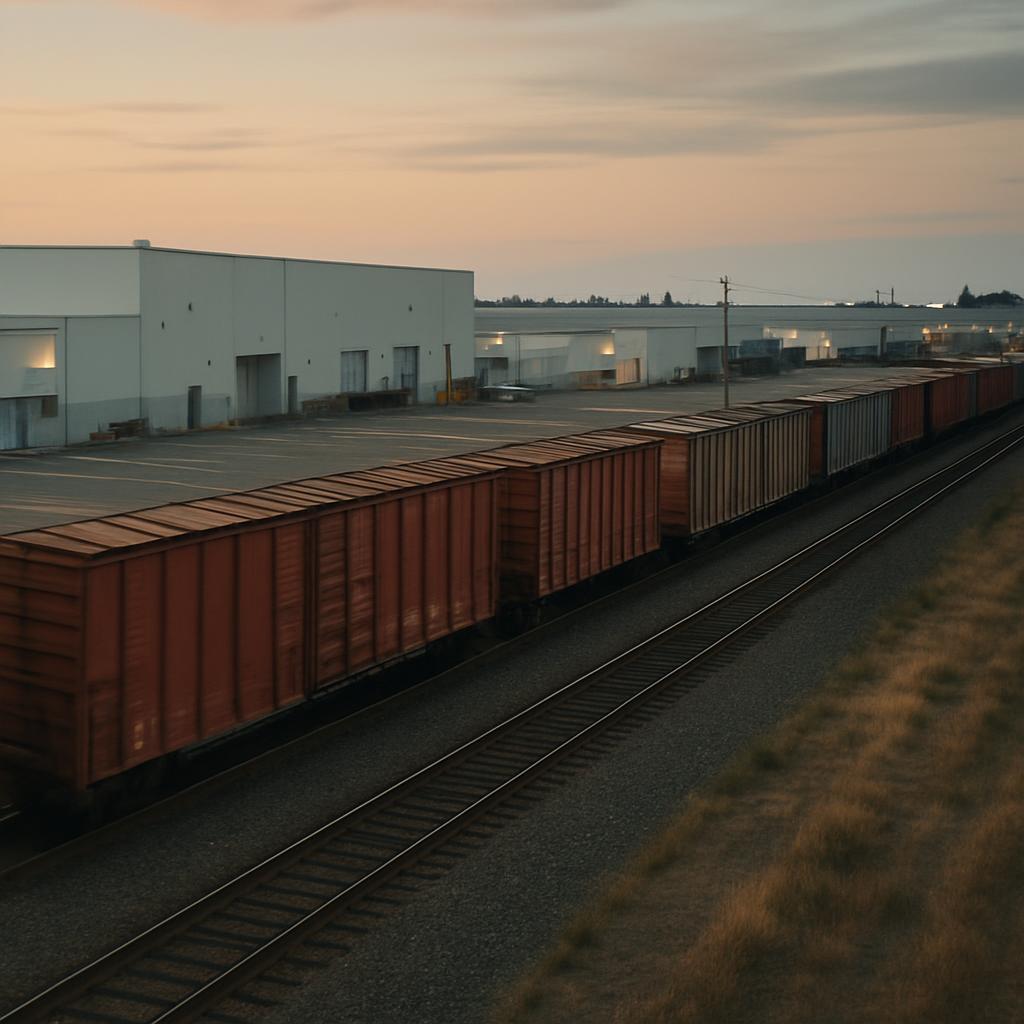
Genesee & Wyoming, one of North America's largest operators of short-line and regional freight railroads, has announced a plan to split into three separate companies, according to Transportation Today News, a restructuring that could ripple through the local economies and industries that rely on its rail network to move goods. The announcement comes alongside a wave of other transportation developments, from a major Northeast port authority's budget proposal to a cargo ship's collision with a bridge and a surge in freight shipping demand.
Key takeaways
- Genesee & Wyoming, a major short-line railroad operator, plans to separate into three independent companies, a move likely to affect regional freight service nationwide.
- The Port Authority of New York and New Jersey has proposed a $10.3 billion budget while a cargo ship strike on a bridge connecting New Jersey and Philadelphia raises fresh infrastructure concerns.
- Freight markets are heating up, with truckload spot rates up 52% year over year and October setting an all-time intermodal volume record.
Genesee & Wyoming to Break Into Three Companies
Genesee & Wyoming has confirmed plans to divide its operations into three distinct companies, though the announcement did not detail the exact structure or timeline of the split. The company is known as one of the largest owners and operators of short-line and regional freight railroads in North America, running lines that connect factories, farms, and ports to the broader national rail network.
Because short-line railroads often serve as the first and last link in a freight journey, any reorganization at a company of Genesee & Wyoming's scale has the potential to affect shippers in smaller and mid-sized communities that depend on rail access for agricultural products, chemicals, forest products, and other bulk goods. Local businesses along these lines will likely be watching closely to see whether service, rates, or ownership of specific routes change as the separation takes shape.
The move also lands amid broader scrutiny of freight capacity and infrastructure planning. In a related development, Pennsylvania has opened a public comment period on its Draft 2050 Freight Movement Plan, giving residents and businesses a chance to weigh in on how the state will manage growing freight demand over the coming decades.
Port Authority of NY-NJ Proposes $10.3 Billion Budget
The Port Authority of New York and New Jersey has proposed a $10.3 billion budget, according to Transport Topics, underscoring the scale of infrastructure investment required to keep the region's airports, bridges, tunnels, and transit links operating. The Port Authority oversees major regional assets including John F. Kennedy International Airport, LaGuardia Airport, Newark Liberty International Airport, the PATH rail system, and several Hudson River crossings.
A budget of this size typically funds ongoing maintenance, capital construction, and modernization projects across the agency's facilities, which serve millions of commuters and travelers throughout the New York-New Jersey metropolitan area each year. Decisions about how the funds are allocated can directly affect toll rates, transit fares, and the pace of long-planned upgrades to aging infrastructure.
Cargo Ship Strikes Bridge Near Philadelphia
A cargo ship struck a bridge connecting New Jersey and Philadelphia, according to a brief report from Transport Topics. Further details on the extent of damage or any resulting traffic disruptions were not included in available reporting.
Bridge strikes by large vessels have drawn heightened national attention since the collapse of Baltimore's Francis Scott Key Bridge in 2024, which prompted widespread review of waterway safety protocols and bridge protections near major shipping channels. Any incident involving a vessel and a bridge in a densely trafficked corridor like the Philadelphia-New Jersey waterway is likely to renew questions about inspection standards and the resilience of aging crossings that carry both vehicle and freight traffic.
Freight Rates Surge as Trucking and Intermodal Volumes Climb
The freight market is showing significant strength heading into the winter season. Truckload spot rates are up 52% year over year, and October set an all-time record for intermodal shipping volume, according to FreightWaves. The data points to a notably tighter capacity environment than the industry has seen in recent years, a shift that can translate into higher shipping costs passed along to businesses and, ultimately, consumers.
Technology is also reshaping how freight gets booked. AI agents are now handling more than 40% of the loads booked at one freight brokerage, FreightWaves reported, signaling a broader industry shift toward automated matching of shippers and carriers. For regional trucking companies and warehouse operators, the combination of rising rates and automated booking tools could mean faster turnaround times but also new competitive pressure from brokers who can move freight more efficiently.