
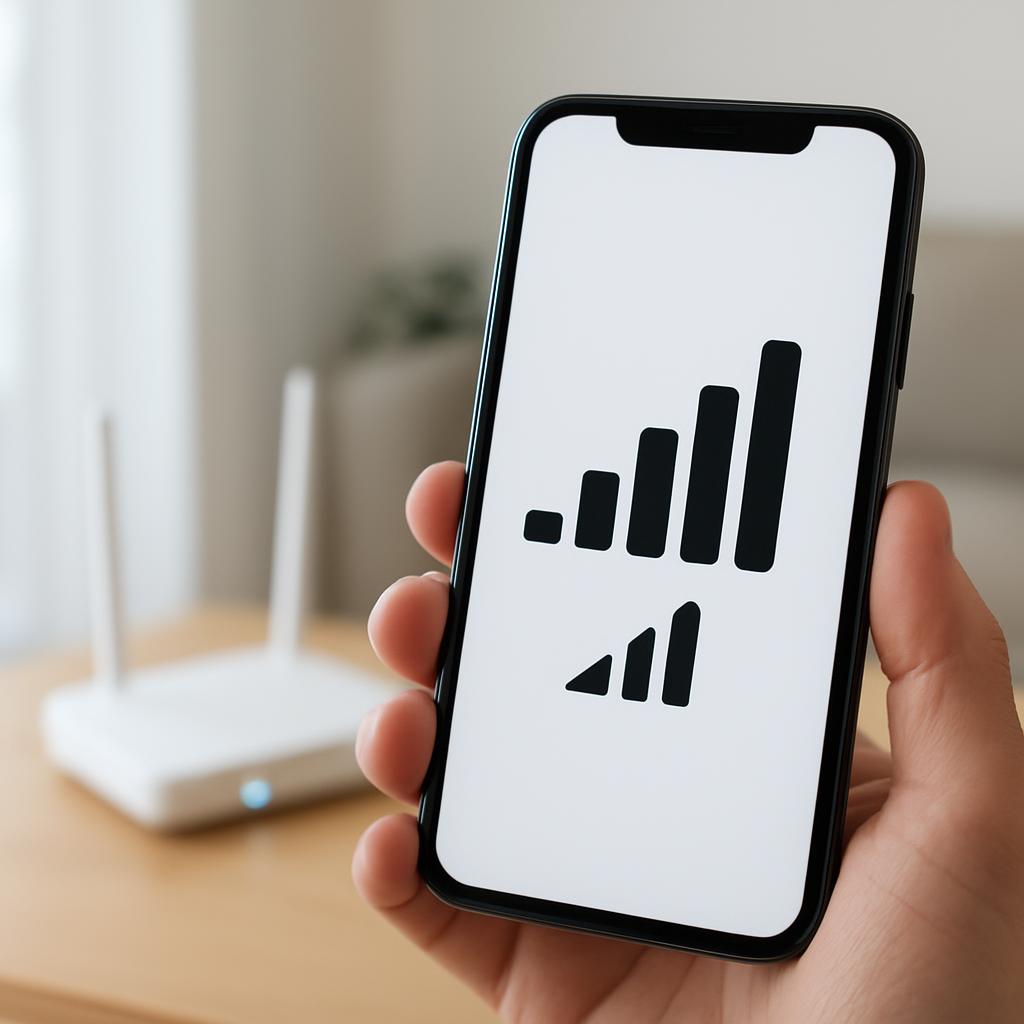
In short: it depends. Under ideal conditions, 5G can be faster than WiFi, particularly older WiFi standards, but the comparison is not straightforward because both technologies vary widely in real-world speed depending on network congestion, distance from a signal source, and the specific version of each standard being used.
5G is the fifth generation of mobile network technology, built to replace and improve upon 4G LTE. Its top-end speeds, especially on the higher-frequency "millimeter wave" version of 5G, can exceed what most home WiFi networks deliver. However, millimeter wave 5G has a significant drawback: it has very limited range and struggles to penetrate walls and other obstacles, so it's typically only available in dense urban areas, stadiums, or specific outdoor locations.
Most people using 5G on their phones are actually connected to "sub-6GHz" 5G, a version that covers much wider areas but delivers more modest speed improvements over 4G. This is the type of 5G most commonly available in homes, suburbs, and rural areas. Its speeds are often comparable to a decent WiFi connection rather than dramatically faster.
WiFi, meanwhile, isn't a single fixed standard either. Older WiFi generations, such as WiFi 4 or WiFi 5, are commonly outpaced by modern 5G networks. But newer standards like WiFi 6 and WiFi 6E were specifically designed to boost speed, reduce congestion, and handle more connected devices at once. A strong, modern WiFi network running on a fast broadband connection can rival or exceed typical 5G performance, especially at home where the router is close by.
One key factor often overlooked in this comparison is congestion. WiFi performance can degrade when many devices share the same network or when a household's internet plan has limited bandwidth. 5G networks can also slow down in crowded areas, such as concerts or busy city centers, where large numbers of phones are competing for the same cell tower resources.
Distance and physical obstacles matter for both technologies, but in different ways. WiFi signals weaken significantly as you move away from the router or add walls and floors between you and it. 5G signals, particularly the faster millimeter wave variety, also lose strength quickly over distance and are easily blocked by buildings, trees, or even glass. Sub-6GHz 5G travels further and penetrates obstacles better, which is part of why it's more widely deployed, even though it doesn't reach the same peak speeds.
Latency, or the delay before data starts transferring, is another consideration. 5G networks were engineered to reduce latency compared to 4G, which matters for tasks like video calls, online gaming, and streaming. WiFi latency is generally low as well, particularly on a wired broadband connection, though it can rise when a network is congested or when using an older router.
For everyday tasks, most users won't notice a dramatic difference between a modern WiFi connection and a solid 5G connection. Streaming video, browsing, and video calls all work smoothly on either, as long as the underlying connection is reasonably strong. The differences become more apparent in edge cases: someone standing in a stadium with access to millimeter wave 5G might see extremely fast download speeds, while someone with an outdated router in a large house with WiFi dead zones might find their home network sluggish by comparison.
The practical takeaway is that neither technology is universally faster. 5G has the potential to outperform WiFi, particularly in areas with access to high-band millimeter wave coverage, but most everyday 5G use relies on the slower, more widely available sub-6GHz version. WiFi's performance depends heavily on the age of the router, the internet plan behind it, and how many devices are competing for bandwidth. Rather than asking which technology is faster in general, it's more useful to compare the specific network and equipment in front of you.