
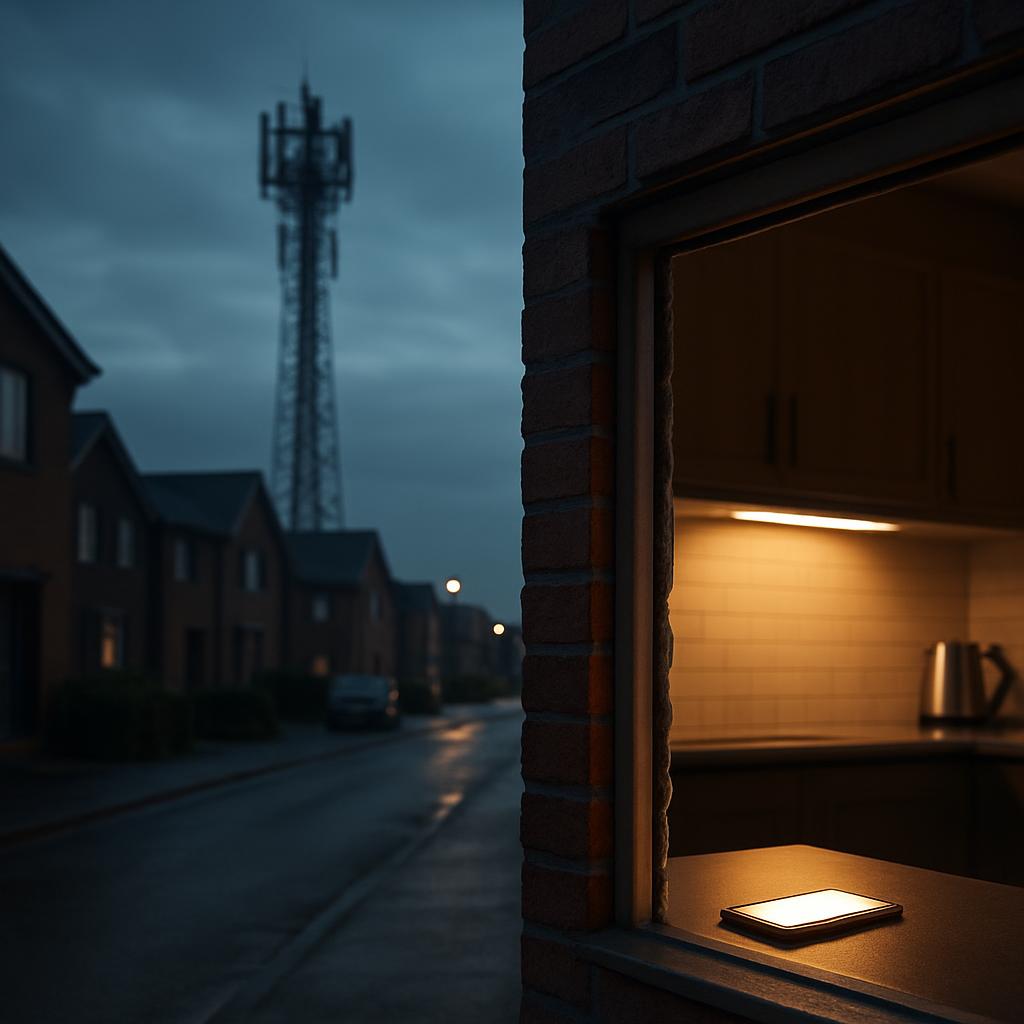
Yes, 5G signals can pass through walls, but how effectively they do so depends heavily on which part of the 5G spectrum is being used. Not all 5G is the same technology operating at the same frequency, and that distinction matters more for indoor coverage than almost anything else about the network.
5G networks are built across three general frequency ranges: low-band, mid-band, and high-band, often called millimeter wave or mmWave. Low-band 5G uses frequencies similar to older 4G networks and travels long distances while penetrating walls, windows, and other obstacles reasonably well. This is the kind of 5G most likely to reach you inside a house or office building, though its top speeds are only modestly faster than strong 4G service.
Mid-band 5G sits in the middle, offering a balance of speed and coverage. It can still get through most residential walls and interior partitions, though thicker materials like concrete, brick, or energy-efficient windows with metallic coatings can weaken the signal noticeably. This band is the backbone of many carriers' everyday 5G coverage because it strikes a workable compromise between range and bandwidth.
High-band mmWave 5G is where the wall problem becomes severe. These signals operate at much higher frequencies, which allows for extremely fast data speeds, but they are easily blocked by almost any solid object. Walls, windows, trees, and even heavy rain or a person's body can significantly degrade or completely stop a mmWave signal. This is why mmWave 5G is typically deployed outdoors in dense areas like stadiums, city blocks, and transit hubs rather than relied upon for whole-home coverage.
The physics behind this is straightforward: radio waves with shorter wavelengths, which is what high frequencies produce, tend to be absorbed or reflected by physical objects more easily than longer wavelengths. Low-band signals have longer wavelengths, letting them diffract around obstacles and penetrate building materials with less signal loss. Mid-band sits between these extremes, while mmWave's very short wavelengths behave almost like light, requiring a clear line of sight to maintain a strong connection.
This tradeoff explains why carriers market 5G coverage maps with different claims depending on location. A carrier might highlight blazing mmWave speeds available on a single city block, while the much broader coverage footprint comes from low-band or mid-band towers blanketing entire regions. When people connect to 5G on their phones inside buildings, they are overwhelmingly connecting to low- or mid-band towers, since mmWave rarely reaches far enough indoors to be practical without additional equipment.
To compensate for mmWave's limited range and poor wall penetration, carriers sometimes install small cells, compact antennas placed closer to users than traditional cell towers, often mounted on light poles or building exteriors. Some buildings also deploy indoor distributed antenna systems or small 5G repeaters to boost signal strength where outdoor towers cannot reach effectively. These solutions are more common in high-traffic venues than in typical homes.
For most everyday users, the practical takeaway is that 5G performance indoors depends less on the technology itself and more on which spectrum your device is latching onto at any given moment. A phone showing a 5G icon in a house could be pulling in a slower but far-reaching low-band signal, or it might lose that connection entirely if it is relying on mmWave outside the home. Building materials play a role too. Modern construction techniques, including metal-backed insulation, double-pane glass, and reinforced concrete, can block or weaken wireless signals of all kinds, not just 5G, which is why indoor cell reception issues are not a new problem created by 5G specifically.
Network engineers typically manage this by using a mix of frequency bands within the same geographic area, a strategy sometimes called a layered network. Low-band coverage acts as a dependable baseline, mid-band adds capacity and speed in populated areas, and mmWave is reserved for locations where ultra-high speeds are both achievable and in high demand, such as packed venues or dense urban corridors. This layered approach is how carriers attempt to deliver both broad coverage and peak performance without requiring every tower to do both jobs equally well.
So while the short answer to whether 5G can get through walls is yes, the more accurate answer is that it depends on which 5G a device is actually using. Low-band and mid-band 5G generally function fine indoors, much like 4G before it, while the headline-grabbing multi-gigabit speeds of mmWave remain largely an outdoor, line-of-sight technology for the foreseeable future.