
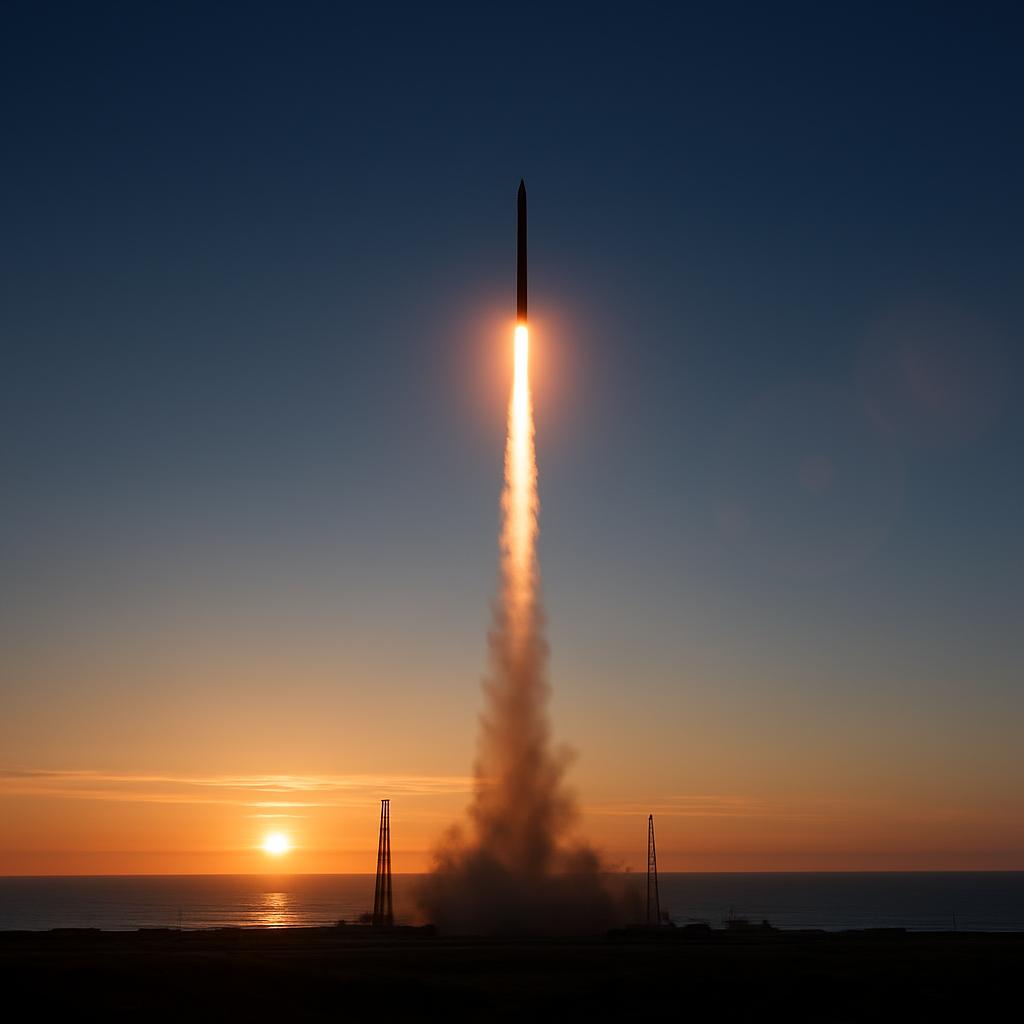
Rocket Lab launched its 99th mission on Sunday, deploying a privately built Japanese Earth-observation satellite into orbit, according to recent reporting, underscoring the company's growing role as a workhorse for commercial and government satellite operators worldwide. The launch is one of several developments making headlines in space news, from a NASA telescope's fiery return to Earth to a Martian meteorite found half a world away in the Sahara.
Key takeaways
- Rocket Lab launched its 99th mission, sending a private Japanese Earth-observation satellite into orbit.
- A long-serving NASA space telescope is falling back to Earth after 22 years in orbit.
- A meteorite recovered in the Sahara Desert has been confirmed as a piece of Mars.
- New research indicates water ice on the dwarf planet Ceres can conceal large underground salt deposits.
Rocket Lab's 99th Launch Deploys Japanese Satellite
Rocket Lab marked its 99th launch to date on Nov. 2, placing a private Japanese Earth-observation satellite into orbit. The mission continues a launch pace that has made the company one of the most active players in the small-satellite launch market, trailing only a handful of national space agencies and SpaceX in total flight count.
Rocket Lab built its business on the Electron rocket, a small launch vehicle designed to carry light payloads such as Earth-imaging satellites, communications spacecraft and scientific instruments into orbit on short notice. The company has increasingly courted international customers, including commercial imaging firms in Asia that rely on frequent, affordable access to orbit rather than waiting for space on larger, less frequent rocket flights.
For communities near Rocket Lab's launch sites and for the broader satellite industry, each additional mission reinforces a shift toward smaller, more specialized spacecraft that can be launched on tighter timelines. Earth-observation satellites like the one launched this week are used for applications ranging from agricultural monitoring to disaster response, giving governments and private companies faster access to imagery of specific regions.
Aging NASA Telescope Falling Back to Earth
A NASA space telescope that has operated for 22 years is now reentering Earth's atmosphere, according to space news reports. Spacecraft that have reached the end of their operational lives are typically allowed to fall back toward Earth in a controlled or monitored manner, with most components burning up during reentry.
Long-running space telescopes often remain in service for decades beyond their original mission timelines, continuing to gather data long after launch before fuel, power or hardware degradation forces retirement. The reentry of an aging observatory typically prompts renewed attention to the scientific legacy of such missions, as well as to how space agencies plan for safely deorbiting retired satellites as orbital traffic increases.
Martian Meteorite Identified in the Sahara Desert
A meteorite discovered in the Sahara Desert has been confirmed to be a fragment of Mars, adding to a small but significant collection of Martian rocks that have reached Earth over the decades. The Sahara has long been a productive hunting ground for meteorite seekers because its dark, dense rocks stand out clearly against pale desert sand, and the region's dry climate helps preserve specimens that might otherwise erode or weather away.
Scientists identify Martian meteorites through distinctive chemical and mineral signatures that match data gathered by spacecraft that have studied the Martian surface and atmosphere directly. Such finds give researchers physical material to study in laboratories on Earth, offering insights into the Red Planet's geology and history that complement data from orbiters and rovers currently operating at Mars.
Ceres' Surface Ice May Hide Salt Deposits
New research suggests that water ice on the surface of Ceres, the largest object in the asteroid belt, can mask extensive underlying salt deposits. The dwarf planet has been a subject of scientific interest since NASA's Dawn mission studied it closely, revealing bright patches on its surface later identified as salt-rich material left behind by liquid that once reached near the surface from below.
The latest findings add to a body of evidence suggesting Ceres retains subsurface water or brine, reinforcing its status as one of the more geologically active small bodies in the solar system. Because Ceres is relatively easy to reach compared with more distant icy moons, it continues to be viewed by planetary scientists as an accessible natural laboratory for studying water-ice chemistry and the potential for brine activity on airless, cold worlds.